
Topics · License, insurance and police
License, insurance and police: DMV test questions
Papers, points and getting pulled over. Here are 40 questions like the ones on the written test, with answers and explanations.
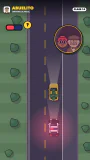 Video lessonIf Police Pull You OverWhat if you see lights behind you?
40 questions with answers
1. You see police lights behind you. What do you do?
- Signal and pull over to the right in a safe spot
- Stop right where you are in your lane
- Speed up to find a better spot first
- Pull over to the left, fast lane side
Show answer
Answer: Signal and pull over to the right in a safe spot
Signal, move right, stop somewhere safe. Nice and calm.
2. You've pulled over and the officer is walking up. What's right?
- Stay inside, hands on the wheel
- Get out and walk to the patrol car
- Step out with your documents in hand
- Dig through the glove box for papers
Show answer
Answer: Stay inside, hands on the wheel
Stay seated, hands where they can be seen. Keeps everyone calm.
3. You're pulled over at night. What helps?
- Turn off every light in the car
- Turn on your interior light
- Turn up the music
- Turn on your high beams
Show answer
Answer: Turn on your interior light
The dome light lets the officer see your hands. Everyone relaxes.
4. Your papers are in the glove box. When do you reach for them?
- Right after you stop, before they arrive
- After you step out of the car
- Never, you don't have to show them
- When asked, and you tell them first
Show answer
Answer: When asked, and you tell them first
Wait until asked, then say: «They're in the glove box, may I get them?»
5. What documents should you always carry when driving?
- Just your license, nothing else
- Your car title and all purchase receipts
- Passport and birth certificate
- License, registration, and proof of insurance
Show answer
Answer: License, registration, and proof of insurance
All three: license, registration, insurance. Without them, your day gets long.
6. In almost every state, to drive your car you need…
- Insurance only if the car is new
- Insurance only on highways
- Nothing, insurance is optional
- Car insurance required by law
Show answer
Answer: Car insurance required by law
It's required almost everywhere. The minimums vary by state.
7. If you drive uninsured and get stopped or crash, you risk…
- Just a verbal warning
- Fines, a suspended license, and paying for damages
- Nothing, if you pay the damage yourself
- Free insurance from the state
Show answer
Answer: Fines, a suspended license, and paying for damages
Fines, a suspended license, and you pay damages yourself. Insurance is cheaper.
8. Under «implied consent» law, if an officer asks for an alcohol test…
- It only applies if you're over 21
- Refusing can cost you your license
- It's only if you crashed
- You can refuse with no problem at all
Show answer
Answer: Refusing can cost you your license
You agreed when you got your license. Refusing has its own penalty.
9. Many states use a points system. What happens if you get too many?
- You get an insurance discount
- Nothing, points just disappear
- You get a free sticker
- Your license can be suspended
Show answer
Answer: Your license can be suspended
Every ticket adds up. Too many points and you're walking.
10. You move to a new address. What must you do about your license?
- Get a brand-new license every year
- Tell the DMV your new address
- Just tell the local mail carrier
- Nothing until it expires
Show answer
Answer: Tell the DMV your new address
Tell the DMV. The deadline varies by state, so don't put it off.
11. With a learner's permit, how can you drive?
- With a friend, even if unlicensed
- Alone, but only in daylight
- With a licensed adult in the seat beside you
- Alone, as long as it's close to home
Show answer
Answer: With a licensed adult in the seat beside you
Always with a licensed adult. Ages and rules vary by state.
12. If your license is suspended and you drive anyway…
- It's a crime and penalties get worse
- It's fine if it's just a small emergency
- It's OK if you carry another ID
- You just get a small ticket
Show answer
Answer: It's a crime and penalties get worse
Driving suspended makes it all worse: bigger fines, longer suspension, even jail.
13. Who must ride in a child safety seat?
- Only on long highway trips
- Young kids, by age and size
- Only newborn babies, no one else
- Nobody, if they sit in back
Show answer
Answer: Young kids, by age and size
Little ones ride in their car seat. Ages and sizes vary by state.
14. What is true about your car's registration and plates?
- You may cover the plates if you like
- Keep it current, plates visible
- You renew them only when you sell
- They only matter for new cars
Show answer
Answer: Keep it current, plates visible
Registration up to date, plates clean and visible. Don't cover them.
15. Before leaving your car unattended, you should…
- Engine off, key out, brake set
- Leave it running if it's just a minute
- Leave it in neutral with the engine on
- Leave the key in it, just in case
Show answer
Answer: Engine off, key out, brake set
Engine off, key with you, brake set. A running car alone is an invitation.
16. During a traffic stop, what attitude is best?
- Yell and get out of the car
- Calm, respectful, and honest
- Say nothing and look away
- Argue to defend yourself on the spot
Show answer
Answer: Calm, respectful, and honest
Calm and respectful. Disagree with the ticket? Handle it later in court.
17. In most states, in what order does a teen get a license?
- Permit, provisional license, then full license
- Full license first, then a permit if you fail
- Provisional license first, then the permit
- Permit, then a full license with no limits at all
Show answer
Answer: Permit, provisional license, then full license
It's called a graduated license: you move up a step as you gain practice. Details vary by state.
18. With a teen provisional license, what restriction is common?
- You must always ride with three friends
- You may only drive on freeways in daylight
- You can't drive cars with automatic transmission
- Limits on teen passengers and night driving
Show answer
Answer: Limits on teen passengers and night driving
Few friends in the car, no late nights, zero phone. Each state sets its own hours and ages.
19. In most states, at what age can you get a learner's permit?
- At age 18, not before
- At age 21
- Around age 15 or 16
- At age 12
Show answer
Answer: Around age 15 or 16
Usually 15 or 16, but it varies by state. Check your handbook, kiddo.
20. With a learner's permit, what age is your supervising adult usually required to be?
- 16, with any kind of license
- Any age, if they sit in the back seat
- 21 or older, with a valid license
- 18, even without a license
Show answer
Answer: 21 or older, with a valid license
Many states require 21 or older, in the front passenger seat. Some set a different age.
21. Since May 2025, if you don't use a passport, what do you need a REAL ID for?
- To register a used car you bought
- To buy gas in another state
- To board domestic flights
- To drive in your own state
Show answer
Answer: To board domestic flights
Look for the star on your license. You don't need it to drive, but you do to fly.
22. Your license expired last week. Can you drive?
- Yes, there's always a 1-year grace period
- No, renew it first
- Yes, if your photo still looks like you
- Yes, as long as police don't stop you
Show answer
Answer: No, renew it first
An expired license is like having none. A few states give some days, but don't count on it.
23. You move to live in another state. What do you do about your license?
- Use it until it expires, even if that's years away
- Get a new one only if police stop you
- Nothing, it works everywhere forever
- Switch to a new-state license soon
Show answer
Answer: Switch to a new-state license soon
You get a short deadline to switch, usually days or weeks. Check your new state's rule.
24. You move to the U.S. with a license from another country. In general…
- You can use it forever without doing anything
- You get a U.S. license with no tests at all
- It works only if you translate it yourself
- Once you're a resident, get a state license
Show answer
Answer: Once you're a resident, get a state license
As a visitor it may work for a while. Once you live here, you need a state one. Rules vary.
25. With a regular car license, can you drive a motorcycle or a big truck?
- Yes, any vehicle that has an engine and wheels
- Yes, the motorcycle, but only in daylight
- No, you need a motorcycle license or a CDL
- Yes, the big truck, if it's for your own job
Show answer
Answer: No, you need a motorcycle license or a CDL
Each needs its own license or endorsement. A car license covers cars and pickups, kiddo.
26. What does minimum liability insurance cover?
- Damage you cause to other people
- Theft of your car and what's inside it
- Your traffic and parking tickets
- Repairs to your own car
Show answer
Answer: Damage you cause to other people
It pays for what you do to others. Your own car needs other coverage, if you buy it.
27. In many states, what is an SR-22?
- The serial number printed on your plates
- A ticket for not wearing your seat belt
- Proof of insurance after a serious offense
- A special permit to drive big trucks
Show answer
Answer: Proof of insurance after a serious offense
It's required after serious stuff, like DUI or driving uninsured. And your rates go up.
28. You bought a car. What do you need to do?
- Keep the old plates and tell no one
- Nothing, the seller handles it forever
- Register it in your name and insure it
- Just change the tires and the oil
Show answer
Answer: Register it in your name and insure it
Register it in your name and insure it before hitting the road. The deadline varies by state.
29. You lend your car to a friend and they crash. In many states…
- It doesn't affect you, since you weren't driving
- Your insurance may pay, since it follows the car
- The state covers it if nobody got hurt
- Only your friend's insurance pays, always
Show answer
Answer: Your insurance may pay, since it follows the car
In many states, insurance follows the car. Lend your keys carefully, kiddo.
30. You got a ticket. What are your options?
- Toss it, if you don't agree with it
- Pay it or contest it in court on time
- Wait a year for it to go away by itself
- Pay the officer in cash right there
Show answer
Answer: Pay it or contest it in court on time
Pay it or go to court, before the deadline. And never hand cash to an officer.
31. What happens if you ignore a ticket and don't pay or go to court?
- Nothing, it cancels after a month
- Your license can be suspended
- They send a friendly note, that's it
- Your insurance cost goes down
Show answer
Answer: Your license can be suspended
That ticket won't forget you. It grows, and you can lose your license.
32. In some states, what can help remove points or keep them off your record?
- Mailing the officer an apology letter
- An approved defensive driving course
- Washing your car once a week
- Switching to another insurance company
Show answer
Answer: An approved defensive driving course
Some states let you take the course to clear points or the ticket. Ask the court.
33. Can you lend your license to a cousin who looks like you?
- Yes, if it's just for a short drive
- Yes, if it's close family
- Yes, if you look alike in the photo
- No, it's illegal and you can lose it
Show answer
Answer: No, it's illegal and you can lose it
Your license is yours alone. Lending it gets you and your cousin in trouble.
34. If you give false info on your license application, what can happen?
- Nothing, the DMV never checks that info
- You get a license, just a different color
- It's denied or canceled, and it's a crime
- They just have you fill it out again
Show answer
Answer: It's denied or canceled, and it's a crime
Lying to the DMV costs you. Tell the truth, even if it takes a little longer.
35. What car should you bring to your road test?
- None, since the DMV always lends you a car
- Any car at all, even one with expired tags
- A safe one with current registration and insurance
- A borrowed one, even if you're not sure it's insured
Show answer
Answer: A safe one with current registration and insurance
Lights, brakes, and signals working, papers current. Otherwise the test won't even start.
36. Police stop you and you left your license at home. What usually happens?
- They take your car for good right there
- You can get a ticket, even if you're licensed
- They let you go if you promise to bring it
- Nothing, saying your license number is enough
Show answer
Answer: You can get a ticket, even if you're licensed
Carry it every time you drive. In many states you can fix it by showing it in court later.
37. A patrol car is behind you with its lights on. What do you do?
- Slow down and pull over to the right where it's safe
- Stop dead in the middle of the street
- Speed up to see if it's really following you
- Keep going until you get home
Show answer
Answer: Slow down and pull over to the right where it's safe
Slow down, signal and pull over to the right, as far out of traffic as you can. Once stopped: turn off the engine, turn on your hazard lights and stay in the car with both hands on the steering wheel.
38. You're stopped at the STOP sign and a car taps you from behind. No one is hurt. What do you do?
- Just take a photo with the other driver and leave
- Leave: it was minor and not your fault
- Pull out of traffic, show each other license, registration, insurance and address, and report to the DMV if needed
- Stay in the middle of the intersection arguing about who's at fault
Show answer
Answer: Pull out of traffic, show each other license, registration, insurance and address, and report to the DMV if needed
You must always stop: leaving is a hit-and-run. If no one is hurt, move the cars out of traffic, then call 911. Show the other driver your license, registration, insurance and address. If the damage is over 1,000 dollars or anyone was hurt, each driver reports the crash to the DMV within 10 days on form SR 1, even if it wasn't their fault.
39. You're parking and you bump the car behind you. Nobody's around. What do you do?
- Wait five minutes and leave if no one shows up
- Leave: nobody saw you
- Leave a note that just says «sorry»
- Look for the owner; if you can't find them, leave a note with your name, phone number and address and report it to the police
Show answer
Answer: Look for the owner; if you can't find them, leave a note with your name, phone number and address and report it to the police
If you hit a parked car, try to find the owner. If you can't, leave a note with your name, phone number and address, securely attached to the car, and report the crash to the police. Leaving without doing that is a hit-and-run.
40. On the freeway you see two cars on the shoulder ahead with their hazard lights on. It looks like a crash. What do you do?
- Pull over behind them to watch
- Slow down and pass carefully without stopping to look
- Keep going the same: it's not in your lane
- Stop in your lane to see what happened
Show answer
Answer: Slow down and pass carefully without stopping to look
If you see hazard lights ahead, slow down: there may be a crash or another emergency. Pass carefully and don't stay close or stop to look: if anyone is hurt, help gets there faster when nobody blocks the road. If you can, move over a lane.
Practice this topic in the app
With voice, games and review of your mistakes.