Topics · Defensive driving
Defensive driving: DMV test questions
Look ahead, mirrors, ABS and other drivers' mistakes. Here are 36 questions like the ones on the written test, with answers and explanations.
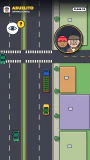 Video lessonLook Far AheadWhere do your eyes go when you drive?
36 questions with answers
1. How far ahead should you look while driving?
- Only at the bumper of the car in front
- About 2 or 3 seconds, the time it takes to brake
- About 10 to 15 seconds ahead
- As far as possible, ignoring what's close
Show answer
Answer: About 10 to 15 seconds ahead
Look far and you'll spot trouble before it shows up, kiddo.
2. In city driving, looking 10 to 15 seconds ahead is about…
- One block
- Up to the next traffic light that's green
- Two or three cars ahead of yours
- A quarter mile
Show answer
Answer: One block
In town, about a block. That's where you spot who's braking.
3. On the highway at higher speeds, looking 10 to 15 seconds ahead is about…
- About 100 feet in front of your car
- A quarter mile
- One block
- As far as your low beams reach at night
Show answer
Answer: A quarter mile
The faster you go, the farther you look. About 1/4 mile.
4. How often should you check your mirrors while driving?
- Only when you're about to change lanes
- Every minute, so you don't get distracted from the road
- Once when you start and once when you park
- Every 5 to 8 seconds
Show answer
Answer: Every 5 to 8 seconds
Quick glances, often. That way you know who's behind you.
5. Your mirrors look clear. Why still look over your shoulder before changing lanes?
- Because mirrors make cars look farther away
- To let the driver behind know you're moving
- Because mirrors have blind spots
- Because the examiner wants it, that's all
Show answer
Answer: Because mirrors have blind spots
A whole car fits in a blind spot. Quick look, then eyes back ahead.
6. How do you set your side mirrors to reduce blind spots?
- To show half your car and half the lane
- Same as the rearview mirror, aimed straight back
- Tilted down, to see the lane line clearly
- Outward, so you barely see your own car
Show answer
Answer: Outward, so you barely see your own car
If you see lots of your own car, you're looking at what you already know.
7. You have a green light. Before entering the intersection, what do you do?
- Honk to warn that you're coming through
- Look only straight ahead at the signal
- Look left, right, and left again
- Speed up, the green is yours
Show answer
Answer: Look left, right, and left again
Green gives you permission, not protection. Someone runs the red.
8. You're coming up on a light that has been green for a long time. What do you do?
- Nothing, green lasts until you get there
- Speed up to make it through on green
- Get ready for it to turn yellow
- Brake hard just in case it changes
Show answer
Answer: Get ready for it to turn yellow
Stale green, yellow's coming. Ease off the gas and think.
9. You're passing kids playing near the street. «Covering the brake» means…
- Foot off the gas, ready over the brake
- Pressing the brake and gas at the same time
- Setting the parking brake halfway to be safe
- Braking hard every few seconds as a warning
Show answer
Answer: Foot off the gas, ready over the brake
With your foot ready, you gain time if someone runs out.
10. A pedestrian is waiting at the corner to cross. What helps you know they saw you?
- Turning on your high beams
- A long honk
- Making eye contact with them
- Speeding up to pass before they cross
Show answer
Answer: Making eye contact with them
If they look you in the eye, they know you're there. If not, watch out.
11. Why is it smart to plan your route before you leave?
- So you can drive faster the whole way
- So you no longer need to watch the road signs at all
- So you don't make sudden, last-second lane changes
- So you only use your phone at red lights
Show answer
Answer: So you don't make sudden, last-second lane changes
Knowing where you're going means no wild moves. Plan at home, kiddo.
12. Why does driving with low beams on during the day help?
- Then you don't need to use turn signals
- Others see you sooner
- It gives you the right of way at intersections
- You see the road better in daylight
Show answer
Answer: Others see you sooner
It's not so you can see. It's so they can see you.
13. You've been driving beside another car, just behind its door, for a while. What do you do?
- Stay there, as long as you don't change lanes
- Move closer to the line so they'll notice you
- Honk so they know you're there
- Speed up or drop back so they can see you
Show answer
Answer: Speed up or drop back so they can see you
You're in their blind spot. Get out of there, kiddo.
14. What is the horn for?
- To hurry the driver ahead when it turns green
- To say hello or goodbye to someone on the street
- To show you're angry at another driver
- To warn others of danger
Show answer
Answer: To warn others of danger
A short tap warns. A long angry blast just starts a fight.
15. When is it right to use your hazard lights?
- When you're stopped or broken down
- When you're changing lanes on the highway
- When you want to thank another driver
- When you double-park for a moment
Show answer
Answer: When you're stopped or broken down
Hazards say «there's a problem here». Use them for that.
16. It's raining hard and you keep driving. Which lights do you use in many states?
- Low beams, without hazards
- High beams and hazards together
- Hazards, so others see you better
- Only your parking lights
Show answer
Answer: Low beams, without hazards
Many states ban driving with hazards on. Check your manual.
17. What's the right way to use your turn signal?
- Use it only when other cars are near you
- Signal right as you start turning
- Signal early and cancel it afterward
- Leave it on for a while, just in case
Show answer
Answer: Signal early and cancel it afterward
Signal early, and don't leave it blinking: it confuses everyone.
18. You're waiting to pull out. An approaching car has its right signal on. What do you do?
- Go now, it's going to turn
- Wave at it to turn faster
- Pull out slowly, trusting its signal
- Wait until it actually starts turning
Show answer
Answer: Wait until it actually starts turning
Lots of folks forget their signal on. Trust the wheels, not the light.
19. Where is it recommended to put your hands on the wheel?
- One at the top, at 12, the other free
- At 9 and 3, or 8 and 4
- At 10 and 2, like the old way
- Both together at the bottom, at 6
Show answer
Answer: At 9 and 3, or 8 and 4
If the airbag goes off, your arms won't fly into your face.
20. With push-pull steering, your hands…
- Let go and let the wheel spin on its own
- Turn from the top with an open palm
- Cross over each other on every turn
- Don't cross over the center of the wheel
Show answer
Answer: Don't cross over the center of the wheel
No arms crossing over the airbag. More control, fewer bruises.
21. Your car has ABS brakes. You need to make an emergency stop. What do you do?
- Pump the brake quickly several times
- Press and release until the car stops
- Press firmly and hold the pedal
- Brake gently so the ABS doesn't kick in
Show answer
Answer: Press firmly and hold the pedal
With ABS, press hard and hold. The car pumps for you.
22. You brake hard with ABS and the pedal vibrates and makes noise. What does it mean?
- The tires have locked up completely
- It's normal: the ABS is working
- The brakes are broken
- You should let go of the pedal right away
Show answer
Answer: It's normal: the ABS is working
It buzzes and grinds, but it's fine. Keep your foot down, kiddo.
23. Your car does NOT have ABS and you brake hard. What do you do if the wheels lock?
- Ease up a little, then brake firmly again
- Let go of the brake and swerve hard
- Press even harder until you stop
- Yank the parking brake
Show answer
Answer: Ease up a little, then brake firmly again
A locked wheel won't steer. Ease up a bit, then squeeze again.
24. With ABS, you're braking hard and there's an obstacle ahead. Can you steer around it?
- No, stop first and then steer
- No, the wheel locks when you brake hard
- Only if you let go of the brake completely
- Yes, ABS lets you brake and steer at once
Show answer
Answer: Yes, ABS lets you brake and steer at once
That's what ABS is for: the wheels don't lock, so you can steer.
25. You're about to lose control near a pole. Where do you look?
- At the pole, to judge the distance
- At your mirrors, to see who's coming
- At the open space where you want to go
- At the dashboard, to check your speed
Show answer
Answer: At the open space where you want to go
Your hands follow your eyes. Stare at the pole, you hit the pole.
26. The main idea of defensive driving is…
- Drive faster than others to get away from them
- Always insist on your right of way
- Trust that everyone follows the rules
- Expect others to make mistakes and keep an out
Show answer
Answer: Expect others to make mistakes and keep an out
Drive like others can't see you. Often they can't.
27. A car pulls up beside you at a light and revs like it wants to race. What do you do?
- Cut it off so it can't pass you
- Don't compete: let it go
- Flash your lights so it calms down
- Beat it off the line to teach it a lesson
Show answer
Answer: Don't compete: let it go
Winning gets you no prize. Let them go; you get there in one piece.
28. A ball rolls into the street in front of you. What do you expect?
- A child running out after it
- The wind to blow it off the road
- The car behind you to brake for you
- Nothing, it's just a ball
Show answer
Answer: A child running out after it
Where a ball goes, a kid follows. Slow down and get ready.
29. The car ahead is weaving and braking for no reason. What do you do?
- Honk until it pulls over
- Pass it fast and cut in front of it
- Get close behind it so you can read its license plate
- Give it lots of room and don't ride beside it
Show answer
Answer: Give it lots of room and don't ride beside it
Something's wrong with that driver. Give room; call 911 once parked if needed.
30. A car is coming head-on in YOUR lane. What do you do?
- Brake, steer right, and honk
- Swerve left into the oncoming lane
- Speed up to get past before it reaches you
- Flash your lights and keep going straight
Show answer
Answer: Brake, steer right, and honk
Always go right. If you go left, they may correct the same way.
31. On a multi-lane street with cars parked on the right, which lane is safest?
- Whichever lane is moving fastest
- The right lane, beside the parked cars
- One that isn't right next to parked cars
- Any lane, as long as you go the limit
Show answer
Answer: One that isn't right next to parked cars
Away from opening doors and people stepping out between cars.
32. You're on the main street. A car is coming very fast toward its STOP sign on the side street to your right. What do you do?
- Speed up to get past first
- Keep going the same: it has to stop
- Take your foot off the gas and get ready to brake
- Stop dead in the middle of the street
Show answer
Answer: Take your foot off the gas and get ready to brake
You have the right-of-way, but don't assume the other driver will stop. Take your foot off the gas and be ready to brake until you see that they did stop.
33. Farther ahead, several cars turn on their brake lights, but the car right in front of you hasn't yet. What do you do?
- Stay close to the car in front so nobody cuts in
- Keep going until the car in front brakes
- Change lanes quickly to get around them
- Take your foot off the gas and start braking gently
Show answer
Answer: Take your foot off the gas and start braking gently
Look far ahead, at least 10 seconds, not just at the car in front of you. If you see brake lights farther ahead, ease off the gas and brake early and gently: you get more time and you warn the drivers behind you.
34. You've been next to the back end of a car in the lane beside you for a while. What do you do?
- Stay there: you're going the same speed
- Move ahead or drop back so it can see you
- Honk so it knows you're there
- Get closer so it sees you in its mirror
Show answer
Answer: Move ahead or drop back so it can see you
You're in its blind spot: if it changes lanes, it won't see you. Don't drive right alongside another car: carefully move ahead or drop back a little.
35. You're driving down a street with cars parked on your right. Where do you drive?
- Close to them, to leave room on the other side
- Leaving space between you and the parked cars
- Fast, to get past them quickly
- Brushing their mirrors: it's fine
Show answer
Answer: Leaving space between you and the parked cars
Keep space between your car and parked cars: a door can open or someone can step out from between two cars. Slow down if there isn't much room.
36. Your light just turned green. What do you do?
- Honk and go
- Go fast: it's your turn
- Look both ways before you go
- Go without looking: the green is yours
Show answer
Answer: Look both ways before you go
Even with a green light, look both ways before you go: someone may run the red.
Practice this topic in the app
With voice, games and review of your mistakes.